The House That Wasn't There
In 2003, Janet Morrison received a foreclosure notice from Farmers & Merchants Bank of Belmont County, Ohio. Nothing unusual there — except according to the federal government, the house she'd been living in for twelve years didn't exist.
 Photo: Farmers & Merchants Bank of Belmont County, via www.bankbranchlocator.com
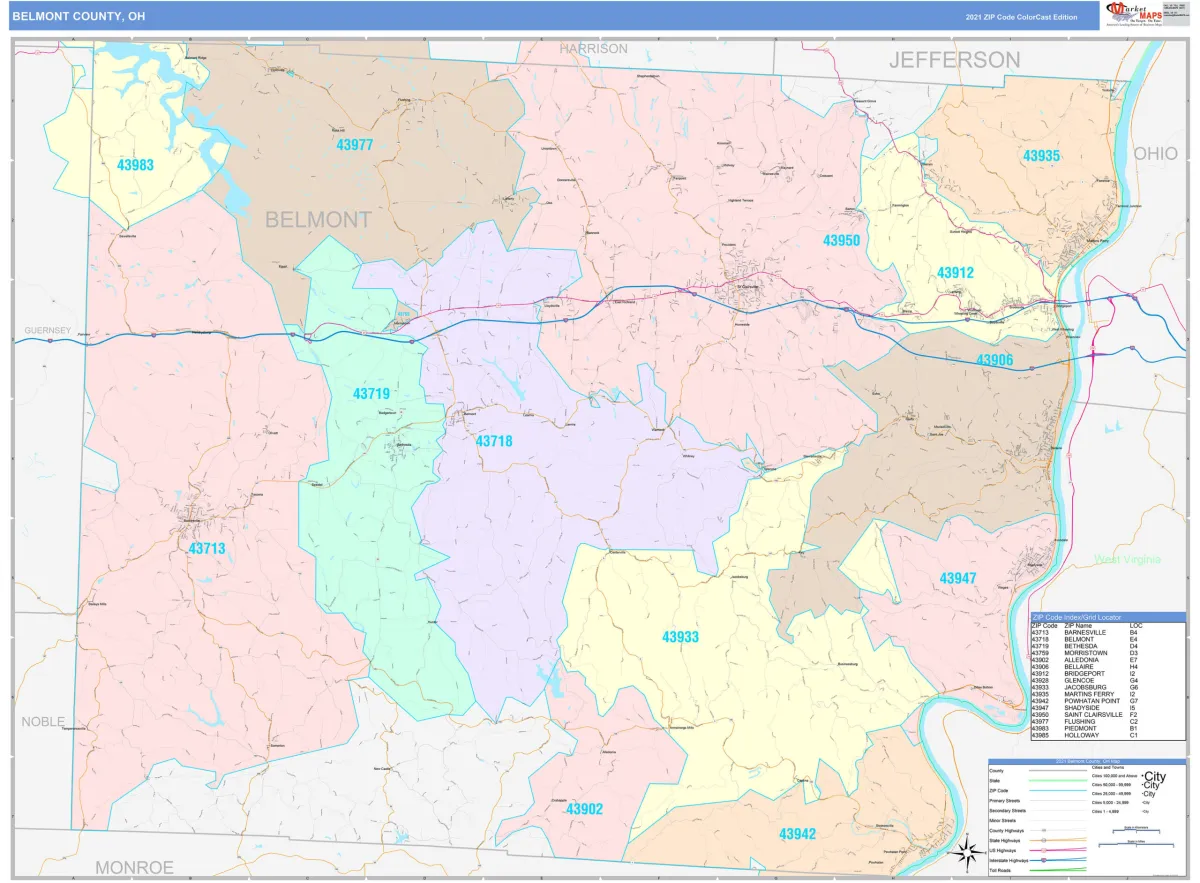 Photo: Belmont County, Ohio, via mapofohio.net
Three years earlier, a routine U.S. Geological Survey boundary adjustment had officially removed Morrison's property from county records. A clerical error during the digitization of century-old land grants had classified her 0.8-acre plot as "federal waterway" — specifically, a tributary of Captina Creek that had been dry since the 1920s.
But Morrison's mortgage payments kept going to the bank. Her property taxes kept going to the county. And when she fell behind on payments, the foreclosure machinery ground forward exactly as designed.
Two Systems, Zero Communication
The problem began in 1891, when the original land grant described Morrison's property using compass bearings and natural landmarks that no longer existed. "Beginning at the large oak by the creek bend, thence north by northwest..." made perfect sense when surveyed by hand. It made no sense to computers trying to reconcile 19th-century descriptions with GPS coordinates.
When the USGS digitized Ohio's land records in 2000, Morrison's property fell into a gap between two survey systems. The computer flagged it as an inconsistency and, following standard protocol, classified it as "undetermined federal land" pending manual review.
That review never came.
Meanwhile, Belmont County's deed registry operated entirely separately from federal land records. As far as the county knew, Morrison owned Lot 47 of the Riverside Addition, just as she had since 1991. Her mortgage, her taxes, and eventually her foreclosure all proceeded through local systems that had no connection to federal databases.
The Foreclosure of Nothing
When Morrison stopped making payments in 2002, Farmers & Merchants Bank followed Ohio foreclosure law to the letter. They filed the required notices, published announcements in the local newspaper, and scheduled a sheriff's sale.
Nobody questioned whether the property actually existed.
The bank won the foreclosure by default when Morrison couldn't afford legal representation. On October 15, 2003, they became the legal owner of a house that federal records insisted was a creek.
The Discovery
The absurdity only came to light when the bank tried to sell the property. Their title company ran a routine federal lien search and discovered the USGS classification. According to the National Land Records Database, the address contained no structures and was designated as "intermittent waterway."
The title company refused to insure the sale.
Farmers & Merchants found themselves owning something that couldn't legally be sold because it didn't officially exist, even though they were paying property taxes on it and could physically walk through its rooms.
Three Courts, Two States
The legal untangling took four years and involved courts in Ohio and West Virginia (where the creek's headwaters were located), plus federal administrative hearings.
Belmont County argued they had properly maintained deed records for over a century. The USGS argued their digitization process was legally mandated and took precedence. The bank argued they had followed all applicable laws and couldn't be penalized for the government's inability to maintain consistent records.
Morrison, meanwhile, continued living in the house throughout the proceedings. The bank couldn't evict her because you can't evict someone from property that doesn't exist. But they also couldn't give her the deed back because they couldn't legally transfer title to federal waterway.
The Resolution
In 2007, a federal judge ruled that the USGS classification was "clearly erroneous" and ordered the property restored to county records. But the ruling came with a catch: because the foreclosure had been conducted legally under state law, the bank retained ownership.
Morrison had to buy her house back from the bank that had foreclosed on property that hadn't existed during the foreclosure.
The final settlement included an unusual provision requiring both Belmont County and the USGS to cross-reference their databases annually to prevent similar conflicts. It was the first time in Ohio history that a court had ordered two separate government entities to coordinate their record-keeping systems.
The Bigger Picture
The Morrison case wasn't unique — it was just the first one anyone bothered to fight in court. A 2008 Government Accountability Office study found over 3,000 similar property classification conflicts nationwide, mostly involving land grants from the 1800s that couldn't be reconciled with modern surveying methods.
Most property owners never discovered the federal classification conflicts because they never tried to sell. They just kept paying taxes on houses that didn't officially exist, while banks kept collecting mortgage payments on properties that couldn't legally be mortgaged.
The Morrison case established legal precedent that local deed records take priority over federal land databases when there's a conflict involving inhabited property. But it also highlighted a fundamental problem: in the digital age, America's property records still operate like a collection of separate fiefdoms, each maintaining their own version of reality.
Sometimes those realities don't match. And when they don't, ordinary people like Janet Morrison get caught in the gap between what exists and what the computer says exists — even when they're the same thing.