The Bridge Engineers Built Perfectly Wrong — Twice
When GPS Wasn't Enough
The Clearwater Creek Bridge project seemed straightforward enough: replace an aging span on County Route 47 in rural Kansas with a modern concrete structure capable of handling increased farm equipment traffic. Federal highway funds had been allocated, environmental studies completed, and construction contracts signed. Everything was proceeding perfectly according to plan.
The only problem? The plan was completely wrong.
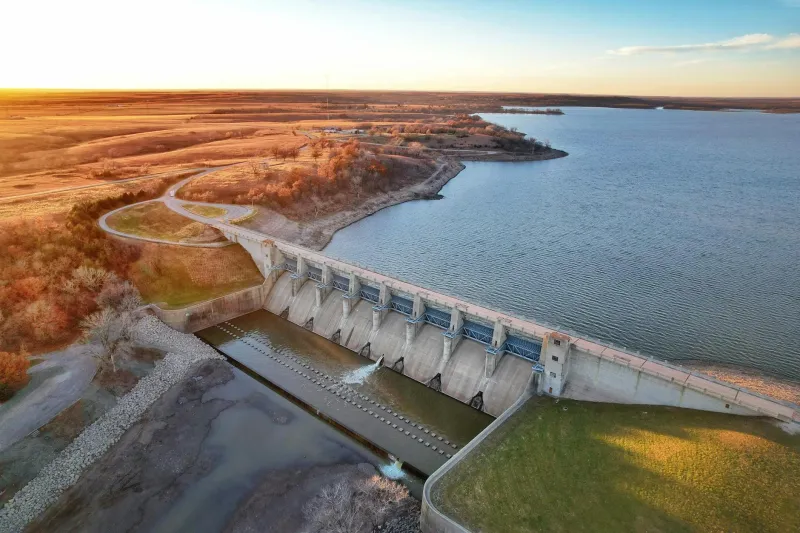
When construction crews finished the $23.7 million bridge in September 2018, they had built a magnificent piece of engineering that connected two empty cornfields. The nearest road was a quarter mile away.
The First Magnificent Mistake
The error originated with a surveying company that used GPS coordinates from a 1952 geological survey instead of current Department of Transportation maps. Those coordinates placed the bridge location precisely where Clearwater Creek had flowed sixty-six years earlier—before agricultural irrigation projects rerouted the waterway and shifted County Route 47 to follow the new creek bed.
"It was actually beautiful work," admitted Kansas DOT engineer Patricia Vance. "Perfect concrete, excellent structural integrity, built exactly to specifications. It just didn't connect to anything."
The bridge stood 847 feet from the actual creek crossing, with no roads leading to either end. Farmers in adjacent fields suddenly found a four-lane bridge spanning a drainage ditch they usually crossed on foot.
The Bureaucratic Scramble
Discovering the mistake triggered a cascade of finger-pointing between federal agencies, state officials, and private contractors. The Federal Highway Administration demanded explanations. The Kansas Department of Transportation launched investigations. The construction company insisted they had built exactly what the plans specified.
Meanwhile, traffic on County Route 47 continued using the original 1940s-era bridge, which was now structurally deficient and supposed to have been demolished months earlier.
"We had one bridge that was falling apart but still useful, and another bridge that was perfect but completely useless," noted county commissioner Bill Hartley. "It was like having a Ferrari in your living room—impressive, but not very practical."
The Decision to Try Again
Rather than admit defeat, officials chose to demolish the misplaced bridge and start over. The demolition alone cost $3.2 million, since the structure had to be carefully dismantled to avoid environmental damage to the surrounding farmland.
New surveys were commissioned using current topographical data. Fresh environmental impact studies were conducted. Updated construction contracts were signed with explicit GPS verification requirements.
Construction on Bridge #2 began in March 2019, with multiple safeguards to prevent another location error.
Lightning Strikes Twice
Six months later, workers completed another flawless bridge in another wrong location.
This time, the surveying error involved confusion between two different Clearwater Creeks in the same county. The new bridge was built over Clearwater Creek East instead of Clearwater Creek West, placing it 1,200 feet from where County Route 47 actually crossed the water.
"I couldn't believe it when they called me," recalled Patricia Vance. "I thought someone was pranking me. How do you make the same mistake twice with completely different safeguards?"
The second bridge was even more isolated than the first, accessible only by hiking through private pastureland. Local farmers began using it as an unofficial landmark when giving directions.
The Third Time's the Charm (Hopefully)
By this point, the Clearwater Creek Bridge project had consumed $47.3 million in federal funds and become a running joke in Kansas political circles. State legislators demanded hearings. Federal auditors launched investigations. Local newspapers started running "Bridge to Nowhere" updates.
Officials finally hired a specialized surveying firm that used ground-penetrating radar, satellite imagery, and physical verification teams to confirm the exact location where County Route 47 crossed Clearwater Creek West.
Construction on the third bridge began in August 2020, with surveyors checking coordinates daily and engineers physically walking the route before any concrete was poured.
Success at Last (Sort Of)
The third Clearwater Creek Bridge opened to traffic in December 2020, correctly spanning the creek where County Route 47 actually crossed it. The original 1940s bridge was finally demolished, ending eight decades of service.
Total project cost: $52.1 million for a bridge originally budgeted at $18.6 million.
The two misplaced bridges were eventually sold to private buyers. One now serves as a hiking trail connector in a state park. The other was purchased by a local rancher who uses it to move cattle between pastures.
The Audit That Asked Why
A federal investigation concluded that the repeated errors resulted from "systemic failures in project oversight" rather than intentional misconduct. Multiple agencies had signed off on incorrect surveys without independent verification. Contractors had followed flawed plans without questioning obvious discrepancies.
"Everyone assumed someone else had checked the location," the audit noted. "No single person or agency took responsibility for confirming that a $50 million bridge was being built in the right place."
The report recommended new protocols requiring physical site verification before any federal infrastructure project begins construction.
Lessons From the Fields
The Clearwater Creek debacle became a case study in government accountability and project management. But it also demonstrated something oddly reassuring: even when bureaucracy fails spectacularly, American contractors can still build excellent bridges.
Today, Kansas farmers occasionally encounter lost tourists looking for the "famous bridges to nowhere" they've read about online. The structures have become unlikely tourist attractions, testament to the engineering skill that can create perfect solutions to the wrong problems.
As one local observer noted, "We may not be good at building bridges where we need them, but nobody builds better bridges where we don't need them."