The Town That Wouldn't Die
In 1990, journalist Sarah Chen was researching Nevada ghost towns when she stumbled across something that didn't make sense. According to the latest U.S. Census, Silver Creek, Nevada, had a population of 287 people.
There was just one problem: Silver Creek had been completely abandoned for fifty years.
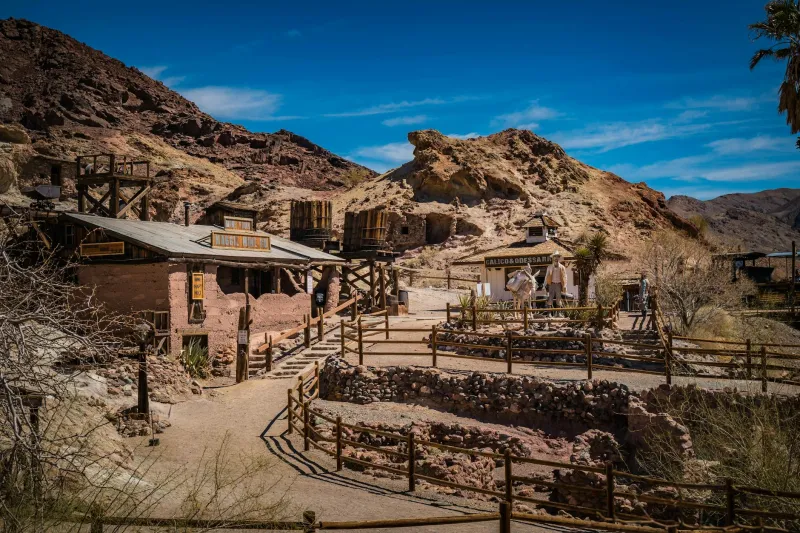
Chen drove out to investigate and found exactly what she expected — a collection of weathered wooden buildings, collapsed mine shafts, and tumbleweeds. No people, no power lines, no running water. Just the skeletal remains of a town that had died with the silver market in 1940.
So why did the federal government think 287 people lived there?
The End of Silver Creek
Silver Creek's story began typically enough for a Nevada mining town. Founded in 1887 during the state's second silver boom, it grew rapidly around the Lucky Strike Mine. By 1920, nearly 400 people called Silver Creek home, supporting two saloons, a general store, a school, and even a small newspaper.
The crash came in 1940. A mine collapse killed six workers and flooded the main shaft, while simultaneously the wartime economy shifted demand away from silver toward strategic metals. Within six months, the mine closed permanently.
By Christmas 1940, Silver Creek was empty. The last residents — mine superintendent Frank Morrison and his family — locked up their house and moved to Reno. The post office closed in January 1941. The school had already shut down when enrollment dropped to three students.
Silver Creek became another Nevada ghost town, visited occasionally by treasure hunters and history buffs but home to nobody.
The Census That Couldn't Stop
Except the U.S. Census Bureau never got the memo.
In 1940, Silver Creek had recorded 394 residents in the federal census. When the 1950 count began, Silver Creek appeared on the enumeration district maps exactly where it had been before. Census takers were assigned to cover the area, and they dutifully drove out to count residents.
Finding nobody home, they followed standard protocol for remote areas: they contacted local officials to verify the population count.
But Silver Creek had been in Mineral County, which was reorganized in 1943. The town's boundaries had been transferred to Esmeralda County, then back to Mineral County in 1947. In the shuffle, nobody updated the Census Bureau's boundary maps.
The 1950 census listed Silver Creek's population as 312 — down from 1940, but still substantial for a town with no living residents.
The Mathematics of Bureaucracy
What happened next reveals the strange momentum of institutional record-keeping.
The Census Bureau's 1950s methodology assumed that remote mining communities experienced gradual population changes between official counts. When enumerators couldn't physically locate residents — common in Nevada's vast rural areas — they used statistical modeling to estimate population based on previous counts, economic indicators, and regional trends.
Silver Creek's "population" was calculated using data about Nevada's mining industry, which was actually growing in the 1950s due to uranium exploration. The Bureau's computers (actually, teams of clerks with adding machines) interpreted Silver Creek as a small but stable mining community that was simply hard to reach.
Each decade, the estimated population was adjusted slightly upward to reflect state-wide growth trends. The Bureau had no mechanism to verify whether towns still existed — they just assumed that places on the maps contained people.
The Growing Ghost Town
By 1960, Silver Creek's official population had reached 324. In 1970, it hit 331. The 1980 census recorded 339 residents.
The numbers were small enough to avoid attention but large enough to trigger automatic inclusion in federal programs. Silver Creek appeared in rural development studies, mining industry reports, and congressional district analyses. Federal agencies allocated resources based on census data that included hundreds of people who didn't exist in a place that was falling apart.
The town's "growth" followed predictable patterns. The Census Bureau's statistical models accounted for birth rates, death rates, and migration patterns. They projected that Silver Creek's population would continue growing slowly but steadily, reaching nearly 400 residents by 2000.
Nobody questioned why a remote mining town was thriving when most of Nevada's rural communities were shrinking.
The Investigation
Sarah Chen's 1990 article in Nevada Magazine was titled "The Town That Time Forgot — And the Census Bureau Can't Find." She documented the abandoned buildings, interviewed local historians, and traced the administrative errors that had kept Silver Creek "alive" in federal records.
The story caught the attention of the Reno Gazette-Journal, which sent a reporter to verify Chen's findings. The follow-up investigation was even more thorough, including interviews with former residents and a review of county records confirming the town's abandonment.
But the most damning evidence came from the Census Bureau itself.
When contacted by reporters, Bureau officials initially defended their count. They cited "standard enumeration procedures" and "established statistical methodologies." They suggested that Silver Creek might have seasonal residents or a transient population that wasn't immediately visible.
Then someone actually looked at the maps.
The Admission
In 1991, the Census Bureau quietly issued a "boundary correction" that removed Silver Creek from the 2000 census enumeration districts. The correction was buried in a technical bulletin that acknowledged "cartographic inconsistencies" in rural Nevada.
Translation: they had been counting a ghost town for fifty years.
The Bureau's internal review found that Silver Creek was one of 23 "phantom communities" in the western United States where similar errors had occurred. Most involved mining towns or railroad stops that had been abandoned but never formally removed from federal maps.
The 2000 census was the first in sixty years that didn't include Silver Creek's phantom population.
The Bigger Picture
The Silver Creek case highlighted a fundamental problem with the census system: institutional inertia. Once a place was included in federal records, it tended to stay there unless someone actively worked to remove it.
This wasn't necessarily malicious or even incompetent. The Census Bureau was designed to track a growing, expanding nation. The system assumed that communities persisted and grew over time. It had no good mechanism for recognizing when places simply ceased to exist.
The error persisted because it was small enough to hide in the margins. Silver Creek's 340 "residents" represented 0.0002% of Nevada's population — a rounding error that didn't affect congressional representation or federal funding in any meaningful way.
But it revealed how bureaucratic momentum can create its own reality. For half a century, Silver Creek existed in the statistical universe even as it crumbled in the physical world. Federal computers knew exactly how many people lived there, even though the answer was zero.
The Legacy
Today, Silver Creek remains what it became in 1940: a genuine ghost town slowly returning to the Nevada desert. The buildings are more weathered, the mine shafts more dangerous, but the place has found an honest peace in abandonment.
The Census Bureau has implemented new verification procedures to prevent similar errors. Modern satellite imagery and GPS mapping make it harder for phantom communities to hide in the statistical shadows.
But Silver Creek's fifty-year afterlife raises questions about what else might be lurking in the federal databases. How many other ghost towns are still growing on paper? How many phantom populations are shaping policy decisions?
In a nation built on data, Silver Creek proved that sometimes the numbers have a life of their own — even when the reality they're supposed to represent has long since turned to dust.