The Forgotten Territory That Governed Itself for Half a Decade While America Looked the Other Way
When Geography Gets Creative
Imagine waking up one morning to discover you've been living outside the United States for the past five years — not because you moved, but because America accidentally forgot you existed. That's exactly what happened to several hundred residents along what should have been the North Carolina-Virginia border in the mid-1800s, thanks to a surveying error so spectacular it created an accidental independent territory that nobody in government noticed for half a decade.
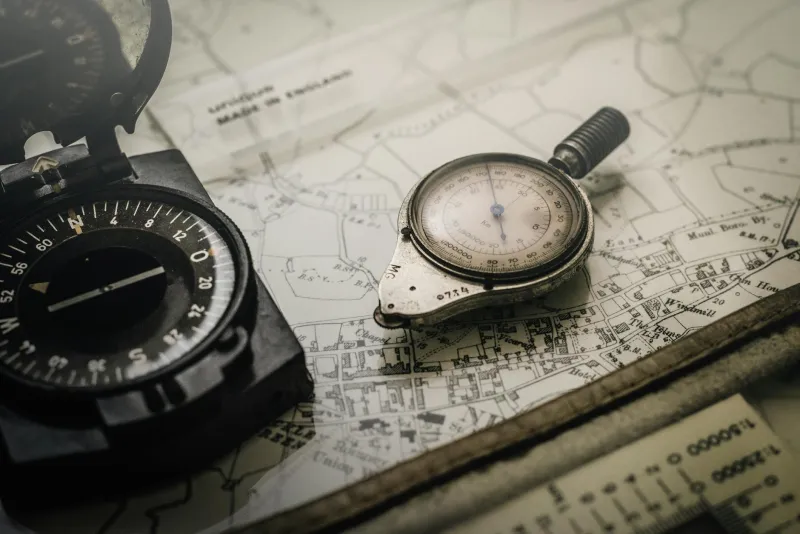
The story begins with the kind of bureaucratic comedy that could only happen when humans try to draw straight lines across mountains, swamps, and dense forests using 19th-century equipment. When surveyors originally mapped the border between North Carolina and Virginia, they relied on compass readings, celestial observations, and a healthy dose of educated guessing. What they didn't account for was how magnetic declination — the difference between magnetic north and true north — would throw their calculations off by just enough to matter.
The Accidental Republic
The result was a narrow strip of land, roughly twelve miles long and varying from a few hundred yards to nearly two miles wide, that technically belonged to neither state. The families living there — mostly farmers, loggers, and their children — found themselves in a peculiar situation. Tax collectors from both states would show up, look at their maps, scratch their heads, and leave empty-handed. Court summons went undelivered because no jurisdiction wanted to claim authority over people who might not legally be their responsibility.
For the residents, this bureaucratic limbo created an unexpected paradise of self-governance. They settled disputes among themselves, maintained their own roads, and operated a barter economy that functioned surprisingly well without any official oversight. Children born in the strip during these years technically had no legal citizenship, though nobody seemed particularly concerned about the implications.
One resident, a farmer named Ezekiel Morrison, later described the period as "the freest years of my life." His journal, discovered in the 1920s, reveals a community that created its own informal justice system, complete with elected mediators and community work projects. When disputes arose, neighbors would gather in Morrison's barn for what they called "settling sessions" — essentially town hall meetings where problems got resolved through discussion and compromise rather than legal precedent.
The Reckoning Arrives
The fantasy came to an abrupt end in 1846 when a federal surveyor named Thomas Crenshaw arrived to conduct a comprehensive border review. Crenshaw had been tasked with resolving several minor territorial disputes between the two states, but he quickly realized he'd stumbled onto something far more significant than a few contested acres.
Crenshaw's measurements revealed the stunning truth: the original survey had created a gap in American sovereignty that had been quietly functioning as its own entity for years. His report to Washington described finding "a population of industrious citizens living in apparent prosperity under no recognizable governmental authority, having established their own customs of commerce and justice."
The federal government's response was swift and characteristically bureaucratic. Rather than celebrating this successful experiment in self-governance, officials immediately moved to assign the territory to North Carolina, largely because the state had been more aggressive in claiming the area during the original dispute.
The Price of Citizenship
The transition back to official American governance proved jarring for residents. Suddenly, they owed five years of back taxes. Their informal property agreements needed to be formalized through official deeds. Children who had been born in the strip required documentation to prove their citizenship. Several families discovered that marriages performed during the "free years" weren't legally recognized, forcing them to remarry in official ceremonies.
Most remarkably, several residents petitioned the government to maintain their independent status, arguing that they had proven self-governance could work effectively without state intervention. Their request was politely denied, though one federal official noted in his correspondence that the community had achieved "a level of civic harmony that many established townships would envy."
Lessons from the Gap
The story of America's accidental territory reveals just how arbitrary the lines that govern our daily lives actually are. These families didn't suddenly become less American when survey errors placed them outside official boundaries, nor did they transform into model citizens when the government reclaimed them. They simply continued living their lives, adapting to whatever administrative reality surrounded them.
Perhaps most remarkably, the community's five-year experiment in self-governance worked better than anyone expected. Crime was virtually nonexistent, disputes were resolved peacefully, and the local economy thrived despite — or perhaps because of — the absence of official oversight.
Today, the former gap territory is indistinguishable from any other rural area along the North Carolina-Virginia border. But for five extraordinary years in the 1840s, it served as an accidental laboratory for American independence, proving that sometimes the most interesting experiments in democracy happen when nobody's paying attention.