The Real Estate Tycoon Who Turned Moon Dust Into Millions — While Uncle Sam Watched in Confusion
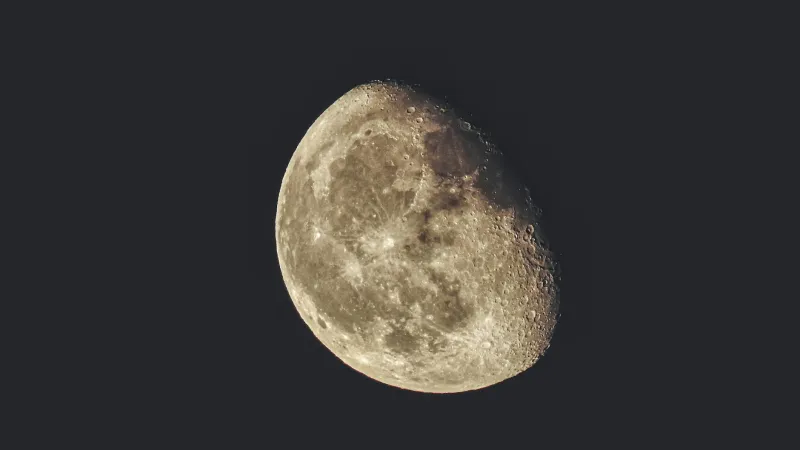
The Day Someone Bought the Moon at a County Courthouse
Walk into any county clerk's office in America, and you'll find the same basic scene: fluorescent lights, tired employees, and endless stacks of property deeds being stamped, filed, and forgotten. It's the kind of bureaucratic machinery that runs on autopilot — which is exactly what Dennis Hope was counting on when he strolled into San Francisco's recorder's office in 1980 with perhaps the most audacious real estate claim in human history.
Hope didn't want to buy a house. He wanted to own the Moon. All of it.
And somehow, a bored clerk stamped his paperwork without batting an eye.
The Loophole That Launched a Thousand Lawsuits (Almost)
Hope's scheme wasn't born from madness — it was born from careful reading. The Nevada entrepreneur had been poring over the 1967 Outer Space Treaty, the international agreement that governs space exploration. The treaty clearly states that no nation can claim sovereignty over celestial bodies. Countries can't plant flags on Mars and call it theirs.
But Hope noticed something curious: the treaty said nothing about individuals.
"The treaty prohibited countries from owning extraterrestrial real estate," Hope would later explain, "but it was silent on private ownership."
Armed with this interpretation, Hope drafted a declaration of ownership for the Moon, Mars, Venus, and most of the solar system's moons. He filed it with the San Francisco County Recorder's Office, where a clerk — following standard procedure for any property deed — stamped it official.
Just like that, Dennis Hope owned the Moon. At least, according to a piece of paper in a filing cabinet in California.
When Bureaucracy Meets Cosmic Ambition
What happened next reveals just how unprepared government agencies were for entrepreneurial space claims. Hope didn't stop at filing paperwork — he sent formal notices to the United Nations, the U.S. government, and the Soviet Union, informing them of his claim and giving them the legally required time to object.
Nobody responded.
The silence wasn't approval, but it wasn't rejection either. It was the bureaucratic equivalent of a shrug — and Hope interpreted it as a green light to start his business: the Lunar Embassy.
The Million-Dollar Moon Rush
By the 1990s, Hope was selling lunar real estate to anyone with $20 and a sense of humor. Each "property deed" came with a lunar map, a copy of the Lunar Constitution (which Hope had thoughtfully written), and mineral rights to whatever might be buried in your personal crater.
The customers weren't just gullible tourists. Hope's client list reportedly included three U.S. presidents, countless celebrities, and major corporations. Hotels.com bought a plot. So did Hilton Hotels. Even former President Ronald Reagan purchased lunar property as a novelty gift.
The business exploded internationally. Hope established partnerships in dozens of countries, selling plots through a network of "Lunar Embassy" franchises. To date, he claims to have sold property to over 6 million people, generating millions in revenue from what essentially amounts to very expensive certificates.
The Government's Cosmic Confusion
Meanwhile, various U.S. agencies were quietly trying to figure out what to do about Dennis Hope.
NASA's position was clear: the Outer Space Treaty makes extraterrestrial property ownership impossible, regardless of clever loophole interpretations. The space agency consistently stated that Hope's deeds were worthless and that no individual could own celestial real estate.
But the State Department's response was more cautious. While they didn't endorse Hope's claims, they also didn't definitively shut them down. Legal experts pointed out that the treaty's language was genuinely ambiguous on private ownership — a gap that Congress had never bothered to close with domestic legislation.
The Federal Trade Commission investigated Hope multiple times but never filed charges. The Better Business Bureau fielded complaints but took no action. County clerks continued accepting lunar property deeds because no law specifically prohibited them.
It was bureaucratic limbo on a cosmic scale.
The Serious Side of Silly Claims
What started as an elaborate publicity stunt began raising genuine legal questions as space commercialization accelerated. If private companies could mine asteroids or establish Moon bases, who would own what? Hope's seemingly frivolous claims highlighted a real gap in space law.
Legal scholars found themselves debating whether Hope might actually have a point. The Outer Space Treaty was written when space travel was purely governmental. Private space exploration wasn't even a fantasy in 1967.
"The treaty assumes all space activities will be conducted by nations," explained one space law expert. "It simply doesn't account for private actors."
The Legacy of Lunar Entrepreneurship
Today, Dennis Hope is in his 80s, still selling Moon plots from his headquarters in Nevada. His Lunar Embassy website processes orders daily, complete with official-looking certificates and legal disclaimers.
The U.S. government still hasn't definitively resolved whether his claims have any validity. Congress passed the Commercial Space Launch Competitiveness Act in 2015, which grants American companies rights to resources they extract from asteroids or the Moon — but it carefully avoids addressing surface ownership claims.
Meanwhile, other countries are updating their space laws, and new international agreements are being drafted. But Hope's original claim remains in that legal gray area — too absurd to take seriously, too carefully constructed to dismiss entirely.
In the end, Dennis Hope discovered something profound about American bureaucracy: sometimes the most outrageous claims succeed simply because nobody knows how to stop them. He turned a filing fee and a clerk's rubber stamp into a multimillion-dollar business, all while exposing a genuine gap in international space law.
Whether he actually owns the Moon is still up for debate. But he definitely owns one of the strangest success stories in American entrepreneurship.