The Dead Man Who Still Owns a Piece of a Federal Highway

Photo: rural Appalachian two-lane highway winding mountain road, via c8.alamy.com
The Road Is Real. The Ownership Is Not.
The highway looks like every other stretch of two-lane federal road cutting through the Appalachian hills. Guardrails. Yellow center lines. The occasional road sign warning of a curve that comes up faster than you'd expect. Trucks use it. Commuters use it. Probably a few tourists use it on their way to somewhere more scenic.
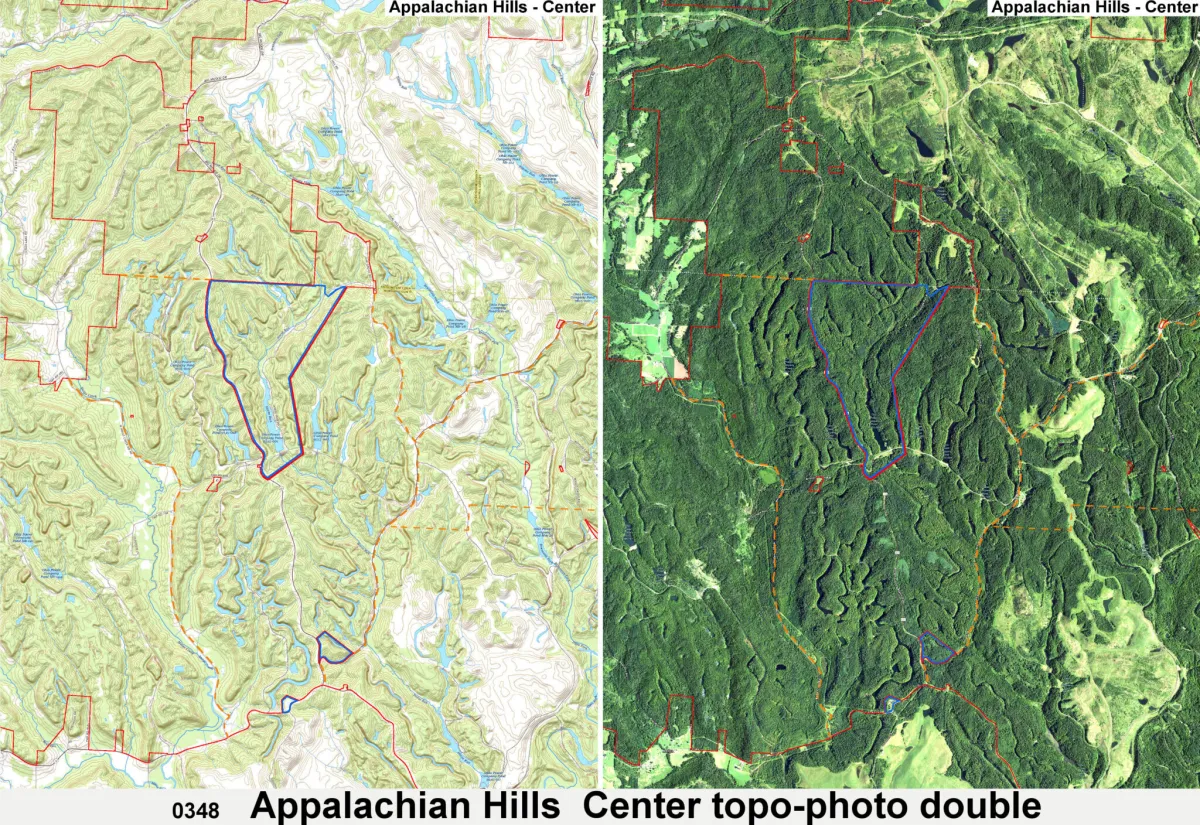 Photo: Appalachian hills, via www.ohiohuntingmaps.com
What none of them know — what almost nobody knows — is that a portion of the land beneath that road technically still belongs to a man who died in 1987.
His name appears on the original deed. It appeared on the eminent domain filing when the federal government came to acquire the land in the 1960s. It appeared on the compensation check that was issued. And then, because of one form that was never properly completed and recorded, it stayed on the deed. Permanently. While the man aged, and eventually died, and left no known heirs behind.
The road got built. The pavement went down. Traffic moved. And the title never moved at all.
How Eminent Domain Is Supposed to Work
When the federal government wants to build a road through private land, it doesn't ask nicely and hope for the best. It uses eminent domain — the legal authority to compel the sale of private property for public use, with compensation paid to the owner. It's a power that's been used thousands of times across the country, and the process, while often contentious, is well-established.
The government files a condemnation action. The landowner is compensated. A title transfer is recorded with the appropriate county clerk. The deed moves from private name to government name. The land is now officially, legally, publicly owned.
Every step of that process has to be completed. The last step — recording the transfer — is the one that actually makes it real in the eyes of the law. Without it, the transaction is financially complete but legally unfinished. The government has paid. The owner has been compensated. But on paper, the owner still owns it.
In this case, that's exactly what happened. The compensation was paid. The road was built. The recording never happened.
The Problem With Dead Owners and Missing Heirs
If the original landowner were still alive, this would be a fixable problem — inconvenient and embarrassing, but fixable. You'd go back to the owner, acknowledge the clerical error, and complete the paperwork.
But the man died in 1987. And he left no known heirs.
This creates a situation that sounds almost comical until you think about it for more than thirty seconds. The government needs to clear the title. To clear the title, it needs to work with whoever legally inherited the property. Nobody inherited the property, because nobody knew there was anything to inherit — the man had been compensated and the road had been built, so everyone assumed the matter was closed. It wasn't closed. It was just buried.
When there are no heirs and a property owner dies, the land typically escheats to the state — meaning the state takes ownership by default. But that process requires a formal legal proceeding, which requires someone to initiate it, which requires someone to notice the problem in the first place. And for decades at a stretch, nobody did.
The Pattern: Notice, Alarm, Silence
Here is the part of this story that is somehow more remarkable than the original mistake.
This problem has been discovered multiple times.
Every few years — sometimes triggered by a highway expansion project, sometimes by a routine title audit, sometimes by a local attorney doing research for an unrelated matter — someone runs a title search on this stretch of road and finds the dead man's name staring back at them. Letters get written. Government lawyers get involved. There are phone calls between federal transportation officials and state attorneys and county clerks. There is, by all accounts, a period of genuine alarm.
And then the matter quietly goes back into a filing cabinet.
The reasons are understandable, if not exactly inspiring. Fixing the problem requires initiating a formal escheatment proceeding, which takes time and money and legal resources. The road isn't going anywhere. Traffic isn't stopping. No one is actively harmed by the anomaly in any immediate, visible way. And so, each time it surfaces, the path of least resistance wins: acknowledge it, document it, defer it.
What It Means to Own Something You Don't Own
There's a philosophical question lurking underneath the legal one, and it's genuinely interesting: what does ownership mean when the owner is dead, the land is paved over, and the government has been maintaining it for sixty years?
Practically speaking, the federal government controls this highway. It funds the maintenance, sets the speed limits, and would make any decisions about its future. The dead man's name on a deed somewhere in a county records office changes none of that.
But legally, ownership matters. It matters for liability. It matters for any future transactions involving adjacent property. It matters if the highway is ever rerouted or decommissioned. And it matters, in a more abstract sense, because a functioning legal system is supposed to know who owns things — especially things the government is spending public money to maintain.
The Filing Cabinet Wins Again
Title attorneys who specialize in government property describe situations like this one as rarer than you'd expect but more common than you'd hope. The eminent domain process moved fast during the highway-building boom of the mid-twentieth century, and not every t was crossed. Decades later, those loose ends surface in title searches and then, more often than not, get quietly deferred again.
Somewhere in rural Appalachia, a dead man's name sits on a deed for a stretch of highway that thousands of people drive every year. The government knows about it. Lawyers have written alarmed letters about it. And then, reliably, the filing cabinet closes.
The road stays open. The paperwork stays broken. And somewhere in a county records office, a man who died in 1987 remains, technically, a property owner.