The Last Soldier: The Man Who Fought World War II Until 1974 Because He Simply Refused to Believe It Was Over

The war ended on September 2, 1945. For most people, that date is a historical footnote — the formal close of the most destructive conflict in human history. For Hiroo Onoda, a Japanese Imperial Army intelligence officer stationed in the Philippine jungle, that date meant almost nothing. He wouldn't stop fighting for another twenty-nine years.
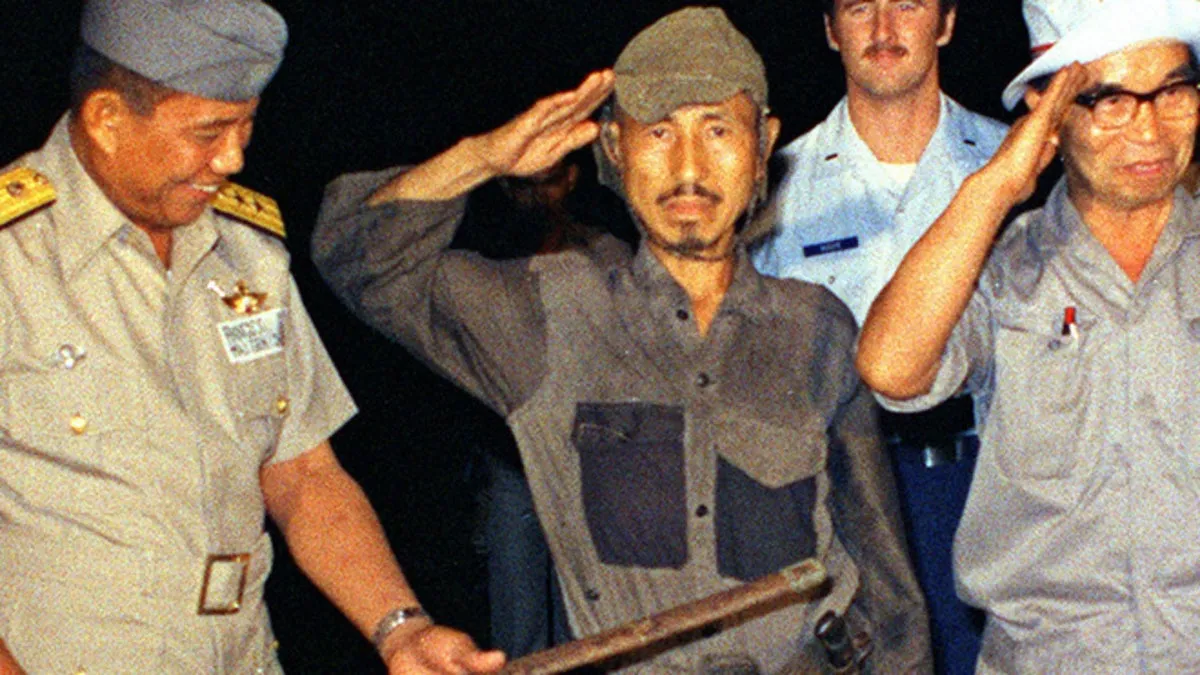 Photo: Hiroo Onoda, via a57.foxnews.com
This is not a story about a man who lost his mind. It's a story about a man who was too disciplined, too loyal, and too well-trained to accept information that contradicted his orders. And it is, without question, one of the strangest true stories to emerge from the twentieth century.
The Mission That Never Officially Ended
Onoda arrived on the island of Lubang in the Philippines in December 1944, tasked with conducting guerrilla operations to slow the Allied advance. His orders were explicit and, as it turned out, fatally open-ended: he was to fight until further orders arrived. He was specifically instructed never to surrender and never to take his own life.
When Allied forces took Lubang in early 1945, most of the Japanese garrison was killed or captured. Onoda and three other soldiers escaped into the dense jungle and continued their mission exactly as ordered — sabotaging equipment, gathering intelligence, and occasionally engaging in firefights with Filipino police and military personnel.
Then August came. Japan surrendered. The war ended.
Onoda didn't believe it.
Propaganda, He Decided
Leaflets were dropped into the jungle announcing the surrender. Onoda and his companions examined them carefully and concluded they were Allied propaganda — a psychological operation designed to trick Japanese soldiers into giving up. It was, from a certain angle, a logical conclusion. Psychological warfare was a real tactic. Fake surrender announcements were a real tactic. Onoda had been trained to be skeptical of exactly this kind of information.
The problem was that this time, the information was true.
Over the following years, the Philippine government and Japanese authorities made repeated attempts to reach the holdouts. Newspapers were dropped into the jungle. Official announcements were broadcast. Family members recorded personal messages pleading with the soldiers to come home. One by one, Onoda's companions either surrendered or were killed in skirmishes — one surrendered in 1950, one was shot by a search party in 1954, and the last remaining companion was killed in a firefight with Philippine forces in 1972.
Through all of it, Onoda fought on. Alone.
Thirty Years in the Jungle
Try to hold that image for a moment. A man living in the Philippine jungle from 1945 to 1974. Sleeping in improvised shelters. Foraging and raiding farms for food. Maintaining his rifle. Keeping his uniform in repair as best he could. Watching the world he'd known in 1944 become, from the fragments of information that reached him, completely unrecognizable — and interpreting every piece of that change as confirmation that the war was still going on, that Japan was still fighting, that his mission still mattered.
He wasn't delusional. He was, by all accounts, entirely rational within the framework of his beliefs. The framework itself was simply wrong, and no one had been able to correct it in a way he could accept.
Philippine civilians and military personnel weren't entirely safe during those three decades. Onoda's continued operations resulted in the deaths of approximately 30 people and injuries to over 100 others — farmers, police officers, soldiers sent to find him. From his perspective, he was a soldier fighting an enemy in wartime. From theirs, he was an armed and dangerous man who refused to accept reality.
The Only Person He Would Believe
By the early 1970s, the story of Hiroo Onoda had become something of a legend in Japan — a symbol of military devotion that many Japanese found both inspiring and deeply uncomfortable. A Japanese student named Norio Suzuki, traveling through Southeast Asia on an adventure, decided to go into the Philippine jungle and find him.
Suzuki found Onoda in 1974. The two men spoke. Onoda confirmed that he was still operating on his original orders and that he would continue to do so until those orders were officially rescinded by his commanding officer.
Suzuki returned to Japan with photographs. Japanese authorities tracked down Onoda's former commanding officer, Major Yoshimi Taniguchi, who had since retired and was working as a bookstore owner. Taniguchi agreed to fly to the Philippines.
 Photo: Major Yoshimi Taniguchi, via www.anime-planet.com
On March 9, 1974, Major Taniguchi stood in the Philippine jungle and formally ordered Hiroo Onoda to cease all military activity and surrender. Onoda, in his deteriorating but carefully maintained uniform, laid down his rifle, his ammunition, and his sword.
He was 52 years old. He had been fighting for 29 years.
What Comes After
Onoda returned to Japan to a reception that mixed awe, sorrow, and genuine national reflection. He was pardoned by the Philippine government for the deaths and damage caused during his long campaign. He eventually moved to Brazil, raised cattle, and later returned to Japan to run a nature school for young people.
He died in 2014 at the age of 91, having spent more of his adult life in a war that had ended than in the peace that followed it.
The story of Hiroo Onoda resists easy conclusions. It is not simply a story about stubbornness, or about the cruelty of war, or about the dangers of absolute obedience. It is all of those things simultaneously, wrapped around the image of one man in a jungle, rifle in hand, doing precisely what he had been trained to do.
The war was over. He just never got the chance to believe it.