He Filed a Routine Trademark. The Government Accidentally Handed Him the American Flag.
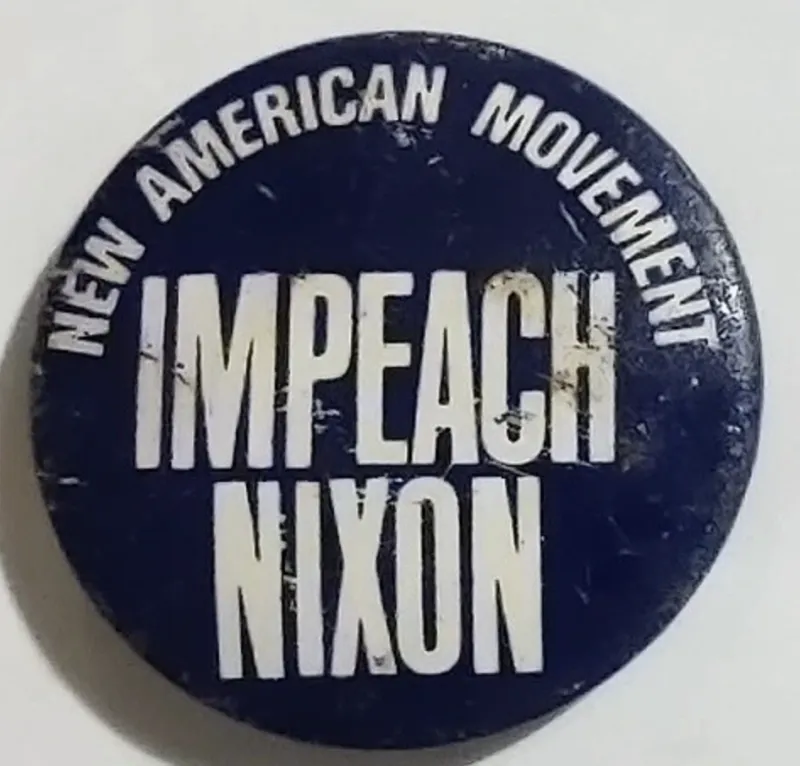
Photo: New American Movement, Public domain, via Wikimedia Commons
Just Another Tuesday at the Patent Office
The United States Patent and Trademark Office processes hundreds of thousands of applications every year. Most of them are forgettable. A new logo for a regional hardware chain. A product name for a line of garden tools. The kind of paperwork that gets stamped, filed, and never thought about again.
In the early 1970s, an Ohio-based novelty goods manufacturer submitted one of these routine applications. His company made patriotic merchandise — the kind of stuff you'd find at a Fourth of July sidewalk sale. Flags, pins, pennants, that sort of thing. The application was for a logo design that incorporated the American flag in a specific stylized arrangement.
The examiner who reviewed it was either having a very busy day or a very distracted one. Either way, the stamp came down: approved.
What nobody noticed — not the examiner, not the applicant's attorney, not anyone in the building — was that the approved trademark effectively granted this Ohio businessman partial commercial protection over a specific rendering of the Stars and Stripes. The flag of the United States of America. The one on the wall of every courtroom that would soon be arguing about this very thing.
What the Trademark Actually Said
Trademarks are, by design, narrow things. They protect a specific mark in a specific commercial context, not an underlying concept. In theory, trademarking a logo that incorporates the flag is different from trademarking the flag itself.
In theory.
In practice, the language of this particular approval was sloppy enough that the scope of protection was genuinely ambiguous. The trademark covered a rendering of the Stars and Stripes detailed enough that competitors producing similar patriotic goods had a reasonable argument that they were infringing. And the manufacturer, once he understood what he had, was not shy about making that argument.
Cease-and-desist letters went out. Competitors complained to the Trademark Office. The Trademark Office reviewed its own approval and realized, with the particular discomfort of an institution confronting its own mistake, that it had a problem.
The Government's Awkward Position
Here's where it gets genuinely strange. The government had two competing interests that pointed in opposite directions.
On one hand, the trademark had been legally issued. Revoking it meant admitting the error and navigating the legal process for cancellation — a process that gives the trademark holder the right to fight back, which this manufacturer was absolutely prepared to do.
On the other hand, the idea of a private citizen holding enforceable commercial rights over the American flag was the kind of thing that makes congresspeople reach for their speechwriters. The optics were, to put it gently, not great.
What followed was more than a decade of bureaucratic combat conducted across multiple venues simultaneously. There were administrative proceedings at the Trademark Office. There were federal court filings. There were, yes, congressional hearings — because at some point a senator noticed that the government had accidentally privatized a piece of national iconography and decided that warranted some remarks.
Eleven Years of Patriotic Legal Theater
The manufacturer's position, stated plainly, was reasonable: he had applied for a trademark, the government had approved it, and he had built a business around it. He wasn't claiming to own the flag. He was claiming to own a specific commercial design. The distinction was legally coherent, even if it was politically radioactive.
The government's position was equally plain: whatever was approved shouldn't have been, the scope was inappropriate, and the public interest in the national flag outweighed any private commercial claim.
Both positions had merit. Neither side had a clean path to victory. And so the matter ground through the system the way legally complicated things do — slowly, expensively, and with occasional moments of absurdity.
At one congressional hearing, a representative reportedly held up a small flag pin and asked, in genuine confusion, whether the man in Ohio now owned it. The answer was something like: probably not, but it's complicated. Which is not the answer anyone wanted.
How It Finally Ended
After more than eleven years, the trademark was cancelled through a combination of administrative action and legal settlement. The precise terms were not made entirely public, which is itself a small bureaucratic tradition — the quieter you can make the resolution of an embarrassing mistake, the better.
The manufacturer received some form of compensation, though accounts differ on the specifics. The Trademark Office quietly updated its internal guidelines to make clearer that national symbols — flags, seals, and similar imagery — required additional scrutiny before approval. The flag, legally speaking, went back to belonging to everyone.
The Rubber Stamp That Changed the Rules
What makes this story worth telling isn't the legal drama, entertaining as it is. It's the reminder that enormous consequences can flow from completely mundane moments. An examiner approved a form. Nobody double-checked. A businessman got a piece of paper.
And then, for more than a decade, the United States government had to spend real money and real political energy unwinding the implications of one distracted afternoon in a government office building.
The American flag has survived wars, recessions, and any number of national crises. In the early 1970s, it also survived a trademark application — but only barely, and only after a fight that nobody involved particularly wanted to have.