It Rained Meat on a Kentucky Farm in 1876 — and the Best Explanation Is Still Vulture Vomit
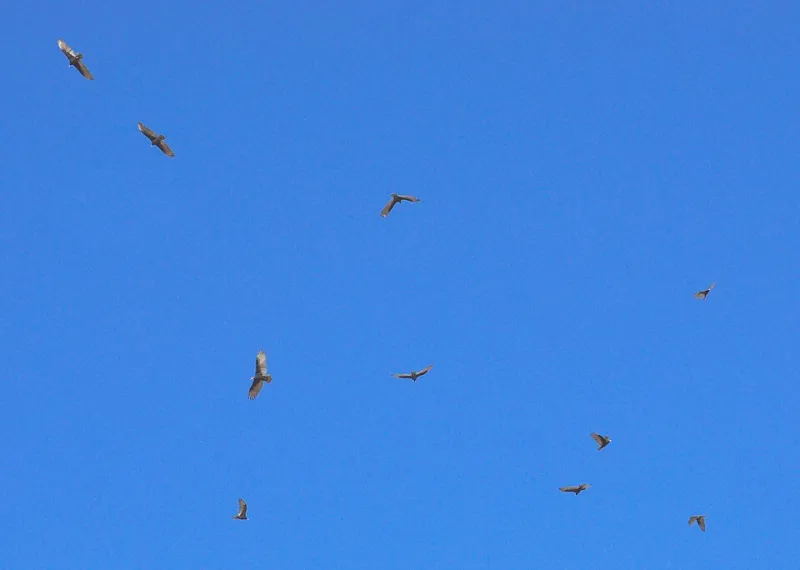
Photo: Jessie Eastland, CC BY-SA 4.0, via Wikimedia Commons
On the afternoon of April 3, 1876, the sky above Bath County, Kentucky, was clear enough to make the whole thing more confusing. No storm clouds. No waterspout. No reasonable delivery system for what witnesses said came next: pieces of fresh-looking meat, falling onto the farm of Allen Crouch near Olympia Springs.
The meat did not arrive as a single lump. According to the account that reached Scientific American, chunks fell over an area roughly 100 yards long and 50 yards wide. Crouch's wife was outside and saw it happen. The pieces looked like beef. Some accounts say they were warm. None of them came with an explanation.
A Clear Day, a Strange Harvest
Bath County in 1876 was farm country dotted with mineral springs and resort hotels. Olympia Springs was a small spa town, the kind of place where people went to drink the water and complain about their livers. The Crouch farm was nearby, ordinary and unremarkable—until it wasn't.
The story spread the way strange stories did in the 1870s: by newspaper, by letter, by rumor. Scientists and doctors asked for samples. Curious neighbors asked for a look. Someone, inevitably, asked whether the meat was edible. Reports suggest at least one person tried it. The verdict was not enthusiastic.
The first serious analysis came from Dr. L. D. Kastenbine, a Louisville physician who examined preserved samples. Under the microscope, the material looked like animal tissue—specifically lung tissue and cartilage. That was a clue, but also a problem. Lung tissue belongs to an animal. It does not belong in the sky.
The Vulture Theory, Which Is Exactly What It Sounds Like
If you need a mechanism for meat falling from a clear sky, you have a few unappetizing options. One is a prank: someone tossed the meat onto the field and let the story do the rest. But no prankster confessed, and the samples were real animal tissue. Another is a hoax: the Crouches made it up. But the story was specific, the samples were examined, and the family had little to gain from a national reputation for sky-meat.
The theory that refuses to die involves vultures. Turkey vultures and black vultures can projectile-vomit when threatened—a defense mechanism that is as effective as it is disgusting. If a flock had gorged on a dead animal and then been startled mid-flight, they could have deposited a mess of partially digested meat onto the farm. The theory explains the tissue. It explains the clear sky. It does not fully explain the volume or the 100-yard spread, but it is the closest thing to a plausible answer that anyone has offered.
There was also the Nostoc theory. Nostoc is a genus of cyanobacteria that can form jelly-like colonies; after rain, it can look like blobs of organic matter on the ground. Some people called it star jelly and blamed it on meteors. But Nostoc is not lung tissue, and the Kentucky samples were examined by people who knew the difference. That theory faded.
Why the Meat Shower Still Matters
The Kentucky Meat Shower was not unique. History is full of things that fell from the sky: frogs, fish, worms, jelly, and the occasional chunk of ice. Most of those have a reasonable explanation—waterspouts lift animals out of ponds and dump them inland. Meat is different. There is no waterspout for beef.
In the 1870s, weather science was still young, and the idea that the atmosphere could deliver something bizarre was not as shocking as it would be today. But the meat shower never got a satisfying ending. The samples were examined, the theories were proposed, and then the story just sat there, like a stain on a tablecloth.
Nearly 150 years later, the best explanation remains a combination of probably vultures and we don't actually know. That is what makes it remarkable. A clear day, a farm, a pile of meat, and a mystery that has outlasted every expert who tried to solve it. The sky, it turns out, has a sense of humor.