Dead Men on the Payroll: How the Navy Kept Sending Checks to a Sunken Submarine's Crew
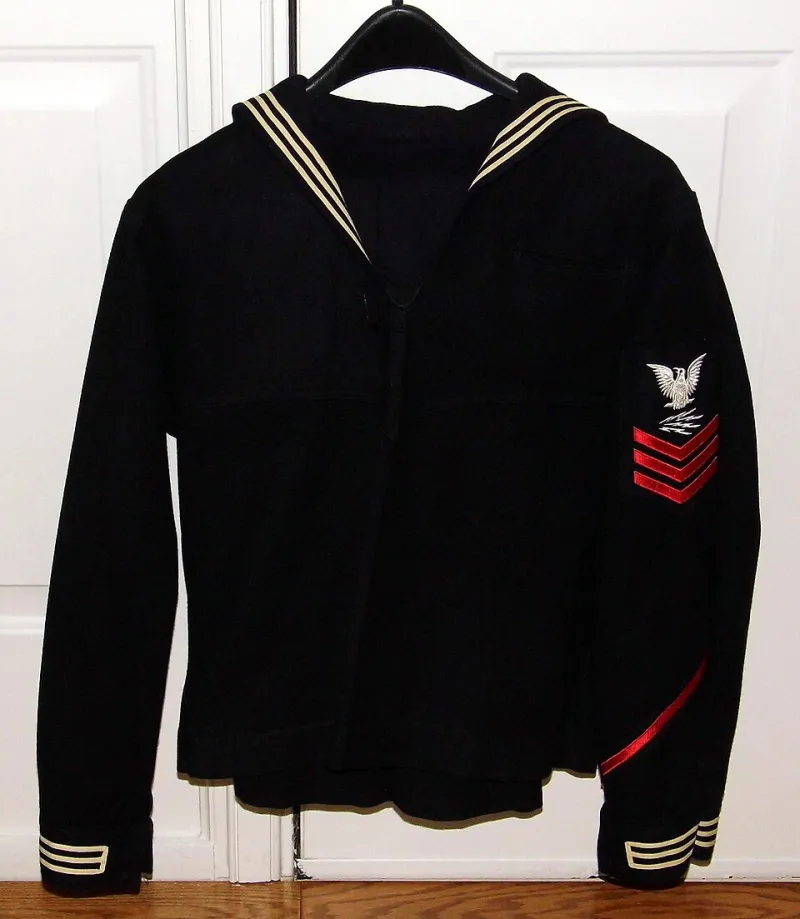
Photo: Joe Haupt from USA, CC BY-SA 2.0, via Wikimedia Commons
In May 1968, the USS Scorpion slipped beneath the surface of the Atlantic Ocean somewhere southwest of the Azores and never came back up. The nuclear-powered submarine was carrying 99 men. None of them survived. To this day, nobody is entirely sure what happened.
The Navy eventually located the wreckage on the ocean floor, roughly 400 miles southwest of the Azores, in October of that year. The sub was confirmed lost. The crew was confirmed dead. And yet, for years afterward — in some cases, for decades — the United States military's administrative machinery kept right on processing paperwork as though the men of the Scorpion were simply delayed.
A Disaster With No Clean Ending
The loss of the USS Scorpion was never fully explained. The Navy convened multiple inquiries. Investigators examined wreckage photographs taken by deep-sea cameras. Theories ranged from a malfunctioning torpedo to a catastrophic implosion. No single cause was ever officially confirmed.
That ambiguity created an immediate administrative problem. Without confirmed bodies — which were impossible to recover from a submarine resting 10,000 feet underwater — the Navy couldn't simply mark 99 men as killed in action using its standard procedures. Instead, the crew was officially designated as missing in action, a classification that carried its own set of rules, obligations, and — critically — financial entitlements.
Under U.S. military regulations at the time, sailors listed as MIA continued to accrue pay and benefits. The logic made sense in a battlefield context: a soldier captured behind enemy lines might return home. His family shouldn't suffer financially in the meantime. The system was designed for uncertainty. The problem was that the USS Scorpion's situation wasn't really uncertain — it was just legally unresolved.
The Machinery That Wouldn't Stop
In the months following the sinking, the Navy began notifying families. Survivors — wives, parents, children — were told that their loved ones were gone. Memorial services were held. The Scorpion was officially stricken from the Naval Vessel Register in 1969.
But military payroll systems are not known for their emotional intelligence. They respond to codes, classifications, and status designations. And as long as a sailor's record reflected MIA rather than KIA, the checks kept coming.
For many families, the payments arrived alongside grief that had nowhere clean to land. The money was real. The loss was real. The paperwork said something else entirely.
Some families received back pay accumulations. Others received allowances that technically assumed their sailor was still alive and incurring expenses. Dependency and indemnity compensation — a benefit designed to support families of the deceased — existed in an awkward parallel with MIA entitlements that assumed the possibility of return.
The formal legal process of having the crew declared dead, rather than missing, unfolded gradually and inconsistently. Some families pursued official declarations of death through the courts relatively quickly. Others did not, either from grief, from a lack of legal guidance, or simply because nobody in authority proactively walked them through the process.
When Bureaucracy Outlives Reality
What makes the Scorpion story particularly strange isn't that the Navy made a mistake. It's that the system was, in its own way, functioning exactly as designed. The MIA designation was a legal status with defined financial consequences. Nobody had written a rule that said unless the ship is on the bottom of the ocean and we photographed it there. The edge case had never been anticipated.
This is how bureaucratic inertia works in large institutions. Rules are written for the common scenario. The uncommon scenario — a submarine that is definitively lost but legally ambiguous — falls into a gap, and the default response is to keep processing.
The Pentagon has faced versions of this problem repeatedly throughout American military history. The MIA system, which grew significantly during and after the Vietnam War, became a subject of intense national scrutiny precisely because of how long administrative designations could persist in the absence of certainty. Men declared missing in Southeast Asia remained in bureaucratic limbo for years, their families caught between hope and paperwork.
The Scorpion's crew represented a different but related version of that limbo — one where the physical evidence was clear but the administrative machinery hadn't caught up.
The Crew That History Remembered
Eventually, the legal and administrative statuses of the Scorpion's crew were resolved. Death certificates were issued. Benefit structures were updated. The paperwork, slowly, caught up with reality.
But the episode left something behind: a quiet reminder that in large institutions, the gap between what is true and what is officially recorded can be surprisingly wide — and surprisingly durable. The Navy knew those men were gone. Their families knew. The wreckage on the ocean floor confirmed it. And yet the checks kept coming, because no single person in the system had both the authority and the awareness to simply make it stop.
The USS Scorpion still rests on the floor of the Atlantic. It is considered a war grave. The 99 men aboard are honored there.
For a while, at least, the United States government was still sending them mail.