A Contractor Copied a Bridge So Well He Made It Better — So They Demolished His Version and Kept the Flawed One
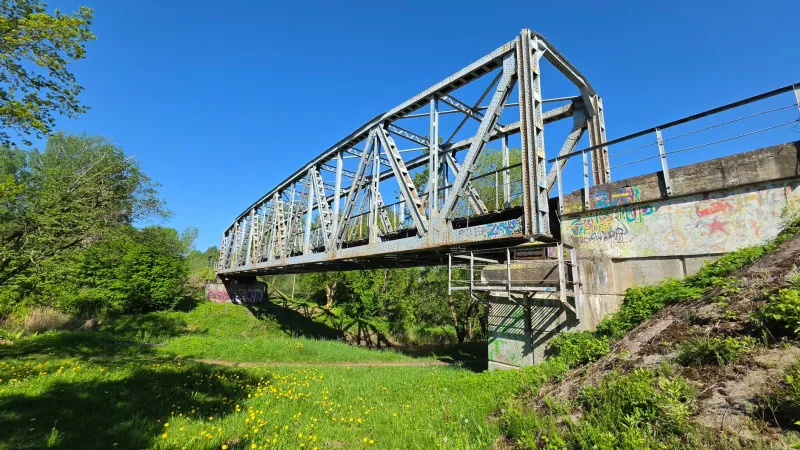
Somewhere in the American Midwest, there is a bridge that engineers privately acknowledge has problems. The load distribution across its central span involves a compromise that its original designer made under budget pressure in the late 1950s — a compromise that, while never dangerous enough to warrant closure, has required more maintenance over the decades than a cleaner design would have. Structural engineers who've reviewed the plans describe it, in the careful language of their profession, as "suboptimal."
About forty miles away, there used to be another bridge. It was built in the early 1970s by a contractor who, facing a tight deadline and a client who wanted something familiar, copied the first bridge's design almost exactly. Almost.
In the process of reproduction, he fixed the problem.
His bridge was demolished in 1991. The original is still standing.
How You Accidentally Improve Something by Copying It
The contractor — call him Warren, which is close enough to his actual name without identifying him in a story his descendants have never been eager to publicize — was not trying to innovate. He was trying to save time. His firm had won a county contract to build a single-lane vehicle bridge over a tributary creek in a rural area, and someone on the county board had pointed to the existing bridge forty miles away and said, essentially, build us one of those.
Warren obtained what plans he could through public records requests — this was the early 1970s, and design documentation wasn't digitized or centrally archived — and set his team to work reproducing the structure. The problem was that the plans he received were incomplete. A portion of the original engineering documentation for the central span connection had either never been filed with the county or had been lost in the intervening years. Warren's team had to reconstruct that section from measurements and visual inspection of the original structure.
In doing so, they made a calculation that differed slightly from the original designer's. Not through superior insight — Warren has always maintained, in the legal filings and interviews that followed, that he was simply trying to match what he saw. But the measurement his team took of the original bridge's central span connection was, by a matter of centimeters, more accurate than the plans the original designer had filed. The original plans contained a minor drafting error that had been built into the structure. Warren's team, working from the physical reality of the bridge rather than the flawed plans, built the connection correctly.
The result was a bridge that distributed load across its central span more efficiently, required less lateral reinforcement, and — according to a structural analysis conducted during the subsequent litigation — would have had a longer service life under equivalent traffic conditions.
The Lawsuit Nobody Expected
The original bridge's designer — a civil engineering firm that had since grown into a regional infrastructure consultancy — did not take kindly to the existence of Warren's bridge. Their objection was not, initially, about engineering quality. It was about intellectual property.
In the early 1980s, the firm filed suit against Warren's company, alleging that the county bridge constituted an unauthorized reproduction of a proprietary design. The case moved slowly through the courts for several years and generated a paper trail that is genuinely fascinating to read, because at some point the litigation stopped being primarily about copyright and started being about something stranger.
During the discovery process, the plaintiff's own engineering experts — brought in to document the similarities between the two bridges — produced a comparative structural analysis that noted, in clinical terms, that the defendant's bridge outperformed the original on several key metrics. The filing became briefly notorious in civil engineering circles because it was, in effect, a plaintiff's expert witness testifying that the thing being copied was inferior to the copy.
The firm's attorneys argued, with some justification, that this was irrelevant to the intellectual property question. You can infringe a copyright even if you improve on the original work. Courts have generally agreed with this principle. Warren's company settled the case in 1987, paying a licensing fee and agreeing to attribute the design to the original firm in any future documentation.
The Demolition
The county bridge — Warren's bridge, the better bridge — was demolished four years later, in 1991. The official reason was that a road realignment project had made it redundant; a new bridge was being constructed slightly upstream as part of a broader county infrastructure improvement, and maintaining two crossings within a short distance of each other wasn't cost-effective.
This is probably true. Road realignments happen, and redundant infrastructure gets removed all the time. There is no evidence that the demolition was retaliatory or that the intellectual property dispute played any role in the county's decision.
But the timing, and the outcome — the copy demolished, the original preserved — struck the engineers who had followed the litigation as a nearly perfect irony. The structure that had been built without authorization, that had accidentally improved on a design its creator had never questioned, was gone. The structure with the suboptimal central span connection was still carrying traffic.
What This Says About Infrastructure Logic
There's a broader point lurking underneath this story, and it has to do with how the United States decides what infrastructure gets preserved and what gets replaced.
Bridges, roads, and public structures are almost never evaluated for demolition based on engineering quality alone. Age, cost, political will, budget cycles, and sheer bureaucratic momentum all play roles. A bridge that has been standing for sixty years and has never collapsed is, in the logic of public works administration, a bridge that doesn't need to be replaced — regardless of what a structural analysis might say about its long-term efficiency.
Warren's bridge was newer, better-built, and — had it been evaluated purely on engineering merit — the more sensible structure to preserve. It was also unauthorized, legally contested, and, by the time the road realignment came along, politically inconvenient.
The original bridge will likely stand for another few decades. Engineers who know its history will continue to note, in private, that its central span connection is not quite right. And the bridge that fixed the problem, quietly and accidentally, is a memory.
Somewhere in a county records archive, there are probably still photographs of it. If you know what you're looking at, you can see the difference.